
 Spring is a very visceral time of the year. Across the United States, flowers spring free from their buds, lifeless tree limbs explode with remarkable color, and all forms of fauna emerge from their winter slumber or return from their equatorial winter locales by some remarkable act of migration (or perhaps a very expensive uber ride). Amidst the bursts of sound and color, however, these overwhelming sensations come at a price: eyes water, sinuses ache until they feel they are bursting, temples twinge and pulse in agony as warm billows and cold fronts give way to one another.
For me, the same situation applies to art rock. Art rock, or more generally, avant-garde instrumentation, can cause the listener to sway in and out of consciousness: intoxicated and entranced while at the same time drowning in sounds and drones, often needing an ibuprofen and a break from the din of noise. Each song is like a modern exhibit, singular; an unassuming set piece to be stared upon, experienced (though not necessarily enjoyed).
The process of introspection, of trying to understand the piece, is typically more enjoyable than its basic consumption. This runs inverse to my listening strategy when it comes to something extremely poppy: “uhh…..just dance along with everyone else… Don’t overthink this too much…..”
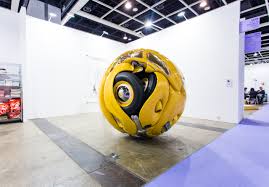
Where I tend to differ from true lovers of art or avant-garde music is that I prefer songs have a cohesive delivery, maintaining the (slightest) amount of rhythmicity and structure; a quality that makes music, well, music, and not a wadded up ball of sounds. Now, I am not saying that art rock should never surprise the listener; the best songs vary instrumentation or throw in an unexpected shift in tempo. But when art rock gets too “arty”, and begins to sound like droning loud noises (by the way, at this point any normal person in your car will have screamed at you to turn off those terrible noises), two important things tend to happen:
1) It becomes difficult to listen to the song more than once or twice. Our brains in some way crave unexpectedness sewn into rhythm, structure, and repetition. It drives up the listenability of a song extraordinarily; people always rave about the re-listenability of Daft Punk’s Discovery, like cold pizza, its crammed full of delicious leftovers begging to be reheated: the samples are very unexpected, yet they are knotted into infectious hooks and builds that beg to be replayed again and again.
2) When sounds are too jumbled and incoherent, it becomes naturally much harder to recognize and distinguish the “voice” of the artist behind the music. While it may not be to point of music to be able to recognize and categorize an artist by their “sound”, it does generate pleasure in the listener to feel that warm feeling of recognition or possibly nostalgia. This was what made the ambient music of Brian Eno so approachable. While his work spanned from really out there space music to emotional soundtrack swells, there were always unmistakable’ Eno’isms apparent in his work that can be picked up on, recognized, and enjoyed.

Which brings us, finally, to Anna Meredith’s new album Varmints. Here we have an expansive yet tightly bound exploration of electronic instrumentation, undeniable electronic art rock. On the album opener Nautilis a song already a few years old, we hear an commanding build up of trumpet fanfare washing and building layer by layer until a resounding drum beat pounds out the conclusion of the song. When I first heard Nautilis, it made me introspect on the ever marching rise of the authoritarian candidate Donald Trump. Why doesn’t the media understand this guy’s appeal? He is an iron-clad asshole, and our country is still very responsive to a strong authoritarian figure. Now was Meredith’s intention in Nautilis to conjure up thoughts of “the Donald”? Much like a modern painting: Yes! That’s the point, the music takes you where you please.
On scrimshaw, a pulsating chip-tune skips and sizzles on repeat as eloquent strings stretch and sprawl across the track until the whole mess abruptly bounces into a very catchy dance track, hearkening to the formula of on Arcade Fire’s early masterpiece Crown of Love. The only proclaimed single of the album R-Type comes on strong with a pulsating tempo and mashed up distorted, guitar algorithms much to the effect of F#^* Buttons Olympians which pounded and reverberated gloriously into the arena of the London Summer Olympics Opening Ceremony in 2012.
My favorite track by far would have to be the mid-album ballad Dowager which made me think of the lonely chunk of metal we sent alone

to take pictures of Pluto for some reason. It is a textbook reminder of how intimate and vocal driven electronic art music can shift into. It reminds me of the prolific Cardiff electronic act Underworld , who are wonderful at marrying complex lyrics and emotions into risk-taking electronic experiments.Meredith’s new album shows strong signs of possessing this unique talent.
This album’s attention to orchestration and percussion should come as no surprise. Meredith has lived in the world of classical music for the last decade, composing hand-clap orchestrations with the National Youth Orchestra of Britain. Varmints checks all the boxes for me; allowing you to ponder the complexity and raw art of the composition while still delivering a cohesive musical package that picks at your emotions and begs to be replayed. Like Spring, the sensations can be overwhelming, but comforting to return to when you see the first signs of new blooms.
Best Tracks:
Dowager, Nautilis, Taken
-Chad R.
 Tones OF HOME